Loading...
Serving Port Orange, FL and surrounding areas. (386) 529-0162
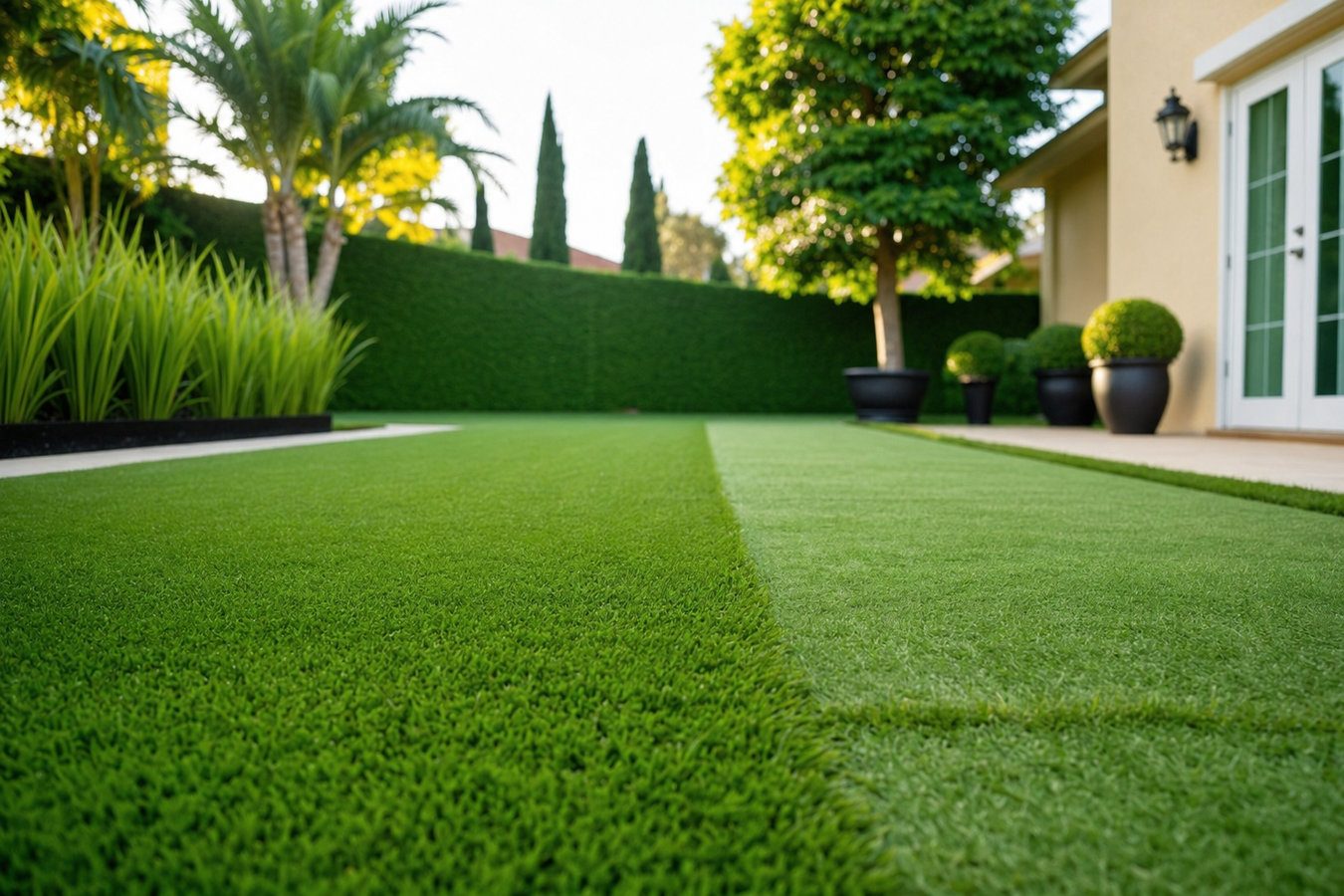
Port Orange Artificial Grass Installation serves Deltona homeowners with synthetic lawn turf, residential turf installation, and drought-tolerant options - every installation uses a compacted aggregate base suited to Volusia County sandy soil, UV-rated materials for 230-plus sunny days per year, and scopes that fit both the original Deltona Lakes neighborhoods and the newer subdivisions near Saxon Boulevard. We reply within one business day.
Deltona is a city where most of the housing stock was built between the 1970s and 1990s - and in that era, builders planted fast-growing grass varieties that are now struggling to compete with the mature tree canopy, sandy soil movement, and compaction from decades of foot traffic. Synthetic lawn turf replaces the worn, patchy natural grass that is so common in the Deltona Lakes neighborhoods with a surface that looks the same in October as it does in June, drains cleanly after afternoon thunderstorms, and needs no mowing, irrigation, or seasonal fertilizing. See our full synthetic lawn turf service.
Deltona is overwhelmingly a single-family homeowner city, with homeownership rates above 70 percent and most lots running a quarter acre or less. Those modest suburban lots - typically with attached garages, defined fencing lines, and a front-and-back lawn that is visible to neighbors and HOA review alike - benefit from a clean, consistent turf installation that holds its appearance through Deltona's long, humid summers without the maintenance burden that natural grass demands in Central Florida's heat.
Deltona homeowners are subject to St. Johns River Water Management District irrigation restrictions that limit watering days and times during dry-season shortfalls - typically from November through May, when natural grass needs the most supplemental water to survive. Drought-tolerant turf removes the irrigation dependency entirely, so your lawn stays green through SJRWMD restriction periods without any watering schedule to manage or water bill impact to absorb.
Deltona's subtropical climate means outdoor pet areas stay hot and humid from May through October - conditions that make poorly designed pet runs develop drainage and odor problems faster than homeowners expect. We install pet-friendly turf with permeable backing and antimicrobial infill that handles Florida's long, sweaty summers, drains completely after heavy afternoon rains, and stays clean with simple rinsing rather than weekly scrubbing.
Many Deltona properties near Lyonia Preserve and the lake-dotted neighborhoods in the western part of the city have mature trees, established beds, and ornamental plantings that have been in the ground for years. Turf for landscaping fills in the bare and patchy areas around those existing features - creating clean borders along driveways and walkways, solving the problem of grass that will not grow under large oaks, and giving the yard a finished look without tearing out mature plantings.
Deltona's heavy pollen season - particularly from the oak and pine trees that are common throughout the original Deltona Lakes neighborhoods - deposits organic material on turf surfaces that accumulates faster than in more open suburban settings. Periodic professional maintenance, including brushing, rinsing, seam inspection, and infill topping, keeps the surface performing correctly through the season and prevents the matting and compaction that shortens a turf system's useful life.
Deltona is one of Florida's largest cities by population, with roughly 100,000 residents spread across a mix of 1970s-to-1990s concrete block homes and newer subdivisions built in the 2000s and 2010s. The city sits on Volusia County's sandy, porous soil - the same geological substrate that runs across much of Central Florida - and that soil behaves in ways that directly affect how artificial turf must be installed. Sandy soil that is simply leveled and covered will shift and settle over time, creating uneven seams and low spots that collect water. Every installation in Deltona needs a properly compacted aggregate base to prevent those problems, and shortcuts at the base stage cannot be corrected after the turf is down.
Climate is the other major factor. Deltona's subtropical summers bring afternoon thunderstorms almost every day from June through September - the kind of sustained heat, humidity, and repeated heavy rain that exhausts natural grass and creates the muddy, compacted lawns that are so common in older Deltona neighborhoods by the end of summer. Tropical storms and hurricane bands also reach Deltona regularly, even though the city sits roughly 25 miles inland from the coast. Hurricane Ian in 2022 and Hurricane Irma in 2017 both brought significant wind and water across Volusia County. A well-installed turf system handles those conditions without damage, while natural grass - and a poorly anchored synthetic lawn - does not.
Our crew works throughout Deltona regularly, and we understand the local conditions that affect artificial grass work here. The original Deltona Lakes neighborhoods - the planned community core that General Development Corporation built out from the 1960s through the 1990s - have homes with well-established root systems, older concrete borders and walkways, and yards where the soil has been settling around tree roots for decades. Installations in those neighborhoods require more careful excavation and base preparation than the newer subdivisions on the city's edges, where the ground is more uniform and the construction is more predictable.
Deltona's major east-west corridors - Howland Boulevard and Saxon Boulevard - run through the heart of the city and connect the older core neighborhoods to the newer growth areas near Interstate 4. The Lyonia Preserve, a 360-acre scrub habitat preserve inside Deltona that is one of the city's most recognized green spaces, anchors a part of the city where properties sit near native Florida vegetation and where sandy soil conditions are particularly pronounced. The city of Deltona operates under Volusia County's building and zoning framework, and our team is familiar with the permit requirements and development standards that apply to residential landscaping work here.
We also serve DeLand, FL, Deltona's county-seat neighbor to the north, and the Edgewater area along the coast. Whether your home is near Lake Monroe on the southern edge of Deltona or in one of the subdivisions off Doyle Road, we are familiar with what the work looks like across the whole city.
Reach out by phone or through the contact form and we will respond within one business day. We ask basic questions about your property - size, location in Deltona, current lawn conditions, and what you are hoping to achieve - so the site visit is already focused when we arrive.
We visit your Deltona property in person to assess the soil conditions, existing grade, tree roots, drainage patterns, and edge work required. This is where we identify whether your lot needs extra base depth due to sandy soil shifting - a common requirement in Deltona - and give you a written, itemized estimate. You are not committed to anything at this stage.
We excavate, grade, compact the aggregate base, and install the turf system in one to two days for most Deltona residential jobs. Many Deltona homeowners commute to jobs in Daytona Beach or Orlando and are not home during the day - you do not need to be present for the work, and we communicate before and after so you know exactly what was done.
When the installation is complete, we walk through the yard with you, show you how the drainage is designed to flow, and explain the simple maintenance routine - rinsing, brushing, and seasonal inspection - that keeps the turf performing well through Deltona's summer storm season and dry winters. Your yard is usable on the same day we finish.
We serve Deltona homeowners across the whole city - from the original Deltona Lakes neighborhoods to the newer subdivisions near Saxon Boulevard. No pressure, no obligations. Just a straight answer about what your property needs and what it will cost.
(386) 529-0162Deltona is one of the largest cities in Florida by population, with around 100,000 residents and a city footprint that stretches across a substantial portion of western Volusia County. It was developed starting in the 1960s by the General Development Corporation as a planned residential community - marketed to retirees and working families across the country - and the bulk of its neighborhoods were built out between the 1970s and 1990s. That construction era defines most of the housing stock: concrete block single-family homes on quarter-acre lots, stucco exteriors, attached two-car garages, and neighborhood streets laid out in the looping cul-de-sac patterns that were standard for planned communities of that period. The original development areas are centered on a section of the city still known informally as Deltona Lakes, with newer growth neighborhoods added on the city's edges along Saxon Boulevard and near Interstate 4 as Deltona's population continued to expand into the 2000s and 2010s.
Deltona sits on Interstate 4 roughly halfway between Orlando and Daytona Beach - about 25 miles from each - which means a large share of residents commute to jobs in both metro areas. The city has a high homeownership rate and a working- and middle-class demographic that tends to be invested in maintaining properties for the long term rather than flipping or renting. Local landmarks include Lyonia Preserve, a 360-acre native scrub habitat managed by Volusia County within the city limits, and Lake Monroe on Deltona's southern boundary. Neighboring communities include Edgewater to the east and DeLand, the Volusia County seat, to the north. More background on the city is available at the U.S. Census Bureau QuickFacts for Deltona.
Professional artificial turf installed beautifully for lasting curb appeal.
Learn MoreTransform your yard with lush, low-maintenance residential turf.
Learn MorePolished commercial turf that keeps your property looking sharp year-round.
Learn MoreExpert maintenance keeps your artificial turf performing its best.
Learn MoreWe know Deltona's neighborhoods, soil conditions, and housing stock. Call today and we will have your written estimate ready within one business day.